
How to Use Pimple Patches Around Facial Hair
Facial hair does not automatically rule out using a clear hydrocolloid patch, but it changes one thing that matters a lot: contact. The adhesive needs enough clean skin around the blemish to stay flat.
WHY BEARD HAIR CAN MAKE PATCHES LIFT
A patch sticks to skin better than it sticks across a layer of hair. The thicker and longer the facial hair, the harder it can be for the full edge of the patch to seal.
LOOK FOR DIRECT SKIN CONTACT
If the blemish sits in an area with sparse hair or short stubble, center the patch carefully and press around the edges. If the spot is buried under dense beard hair, the patch may not sit flat enough to be practical.
SMALLER CAN BE BETTER
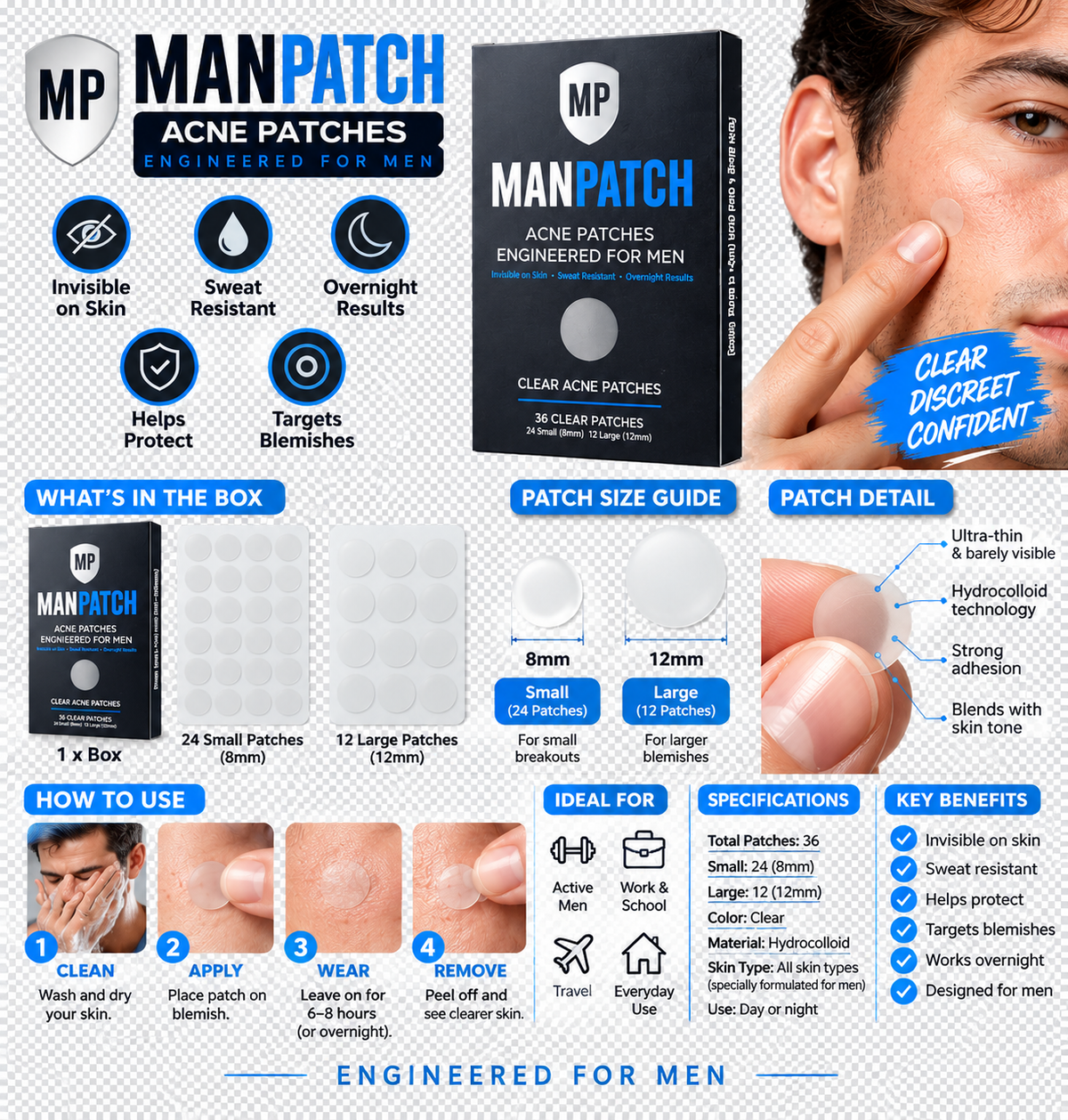
For a small blemish close to beard hair, an 8mm patch can give you more precise placement. Less surface area means there is less chance of unnecessary adhesive sitting across nearby hairs.
USE A LARGER PATCH ONLY WHEN YOU NEED THE COVERAGE
A 12mm patch can make sense for a larger blemish or when you need more surrounding skin contact. Bigger is not automatically better—use the size that actually fits the area.
KEEP THE AREA DRY
Beard oils, moisturizers, shaving products, and sweat can all make a patch slide or lift. Before applying, clean the area and dry it thoroughly.
DON'T FIGHT THE BEARD
If the hair is too dense for the patch to stay flat, forcing a large patch over it usually is not worth it. Use the patch where it can make real skin contact and choose another form of care for areas where it cannot.
PRECISION WHEN YOU NEED IT.
MANPATCH gives you two sizes in every box: 24 small 8mm patches and 12 large 12mm patches.
READ THE SIZE GUIDE